
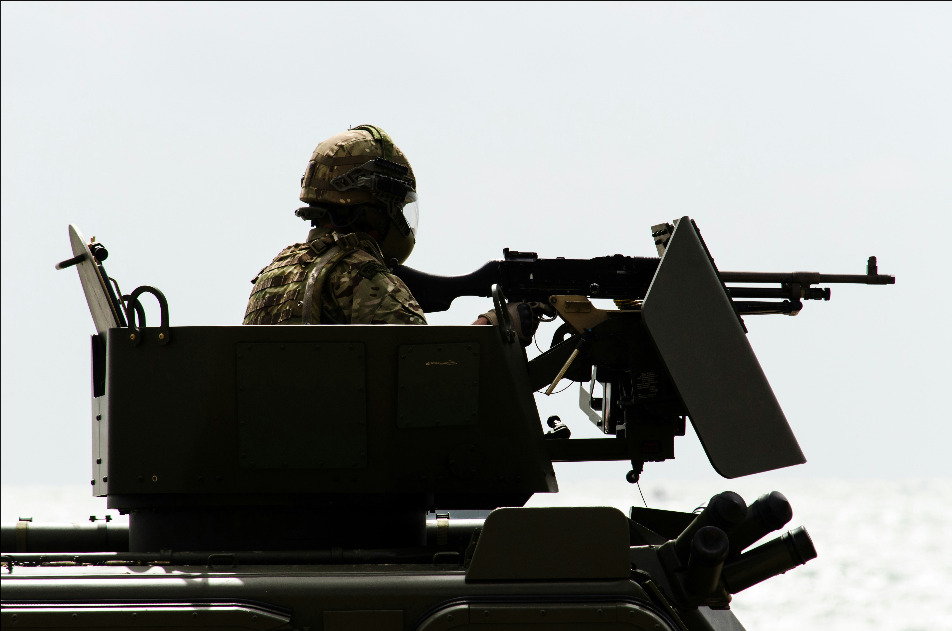
Artificial intelligence has become the centrepiece of a new global arms race that makes Cold War nuclear competition look almost gentlemanly by comparison. Nations worldwide are investing billions in AI-powered military systems—from autonomous weapons and surveillance networks to strategic planning algorithms and cyber warfare capabilities. The United States, China, Russia, and other powers compete not merely for military advantage but for technological supremacy that could determine global influence for decades. This competition raises profound questions about international stability, the future character of warfare, and whether humanity can maintain meaningful control over increasingly autonomous military systems (Horowitz, 2018; Johnson, 2019). The stakes are high enough to make even the most hawkish general pause for thought, though whether such pauses translate into restraint remains uncertain.
Autonomous weapons systems represent perhaps the most controversial military AI application, generating debates that combine technical complexity with ethical philosophy and practical concerns about battlefield chaos. These systems can identify, target, and engage enemies without human intervention—decisions previously requiring human judgment now delegated to algorithms operating at machine speed (Boulanin and Verbruggen, 2017). Proponents argue autonomous systems reduce risks to military personnel and can make more consistent, less emotionally influenced decisions than humans under combat stress. Critics counter that removing humans from lethal decision-making crosses moral lines, creates accountability gaps when systems malfunction or commit war crimes, and lowers barriers to armed conflict by making warfare cheaper and less politically costly—concerns that sound increasingly prescient as deployment accelerates (Scharre, 2018).
The AI arms race extends beyond weapons to encompass intelligence gathering, logistics, training, and strategic planning—essentially every aspect of military operations. AI-enhanced surveillance systems can process vast quantities of satellite imagery, communications intercepts, and sensor data to identify threats and opportunities invisible to human analysts working at human pace. Machine learning optimises supply chains, predicts equipment failures, and plans complex operations involving thousands of moving parts. AI-powered simulations train personnel and test strategies without expensive live exercises or risking actual lives. These applications offer genuine military advantages whilst raising fewer ethical concerns than autonomous weapons, though their cumulative effect accelerates the overall pace of military competition in ways that may prove destabilising (Allen and Chan, 2017; Payne, 2021).
Geopolitical implications of AI military competition create dynamics reminiscent of previous arms races but with novel characteristics that complicate traditional deterrence models. Unlike nuclear weapons, AI capabilities develop incrementally without clear thresholds, making it difficult to assess relative strength or establish meaningful arms control agreements. The dual-use nature of AI—wherein civilian and military applications share underlying technology—prevents the kind of technological isolation that characterised nuclear programmes. Corporate involvement in AI development creates tensions between profit motives and national security, whilst international scientific collaboration conflicts with desires to maintain technological leads. China’s civil-military fusion strategy explicitly leverages commercial AI development for military purposes, whilst Western democracies grapple with ethical concerns about military-technology company partnerships that authoritarian states simply ignore (Kania, 2017; Horowitz et al., 2018).
Managing the AI military competition requires international cooperation that current geopolitical tensions make frustratingly difficult to achieve. Arms control frameworks developed for nuclear weapons translate poorly to AI, where verification proves technically challenging and competitive pressures discourage transparency. The Campaign to Stop Killer Robots advocates for preemptive bans on fully autonomous weapons, though major military powers show limited enthusiasm for constraining potentially decisive capabilities before rivals do likewise. Track 1.5 diplomatic initiatives bring together government officials, researchers, and ethicists to discuss norms around military AI, producing recommendations that governments sometimes acknowledge but rarely implement (Boulanin et al., 2020). The fundamental dilemma remains: individual nations face incentives to pursue military AI advantages even whilst collectively recognising the risks of uncontrolled competition. Breaking this prisoners’ dilemma requires political will currently in short supply, leaving the world to muddle towards an AI-enabled military future whose contours remain uncomfortably uncertain (Maas, 2019).
References
Allen, G. and Chan, T. (2017) Artificial Intelligence and National Security. Cambridge, MA: Belfer Center for Science and International Affairs.
Boulanin, V. and Verbruggen, M. (2017) Mapping the Development of Autonomy in Weapon Systems. Stockholm: SIPRI.
Boulanin, V. et al. (2020) Limits and Prospects for Transparency in Military AI. Stockholm: SIPRI.
Horowitz, M.C. (2018) ‘Artificial intelligence, international competition, and the balance of power’, Texas National Security Review, 1(3), pp. 36-57.
Horowitz, M.C., Allen, G.C. and Kania, E.B. (2018) Strategic Competition in an Era of Artificial Intelligence. Washington, DC: Center for a New American Security.
Johnson, J. (2019) ‘Artificial intelligence and future warfare: Implications for international security’, Defense & Security Analysis, 35(2), pp. 147-169.
Kania, E.B. (2017) Battlefield Singularity: Artificial Intelligence, Military Revolution, and China’s Future Military Power. Washington, DC: Center for a New American Security.
Maas, M.M. (2019) ‘How viable is international arms control for military artificial intelligence?’, Contemporary Security Policy, 40(3), pp. 285-311.
Payne, K. (2021) ‘Strategy, evolution, and war: From apes to artificial intelligence’, Comparative Strategy, 40(4), pp. 351-371.
Scharre, P. (2018) Army of None: Autonomous Weapons and the Future of War. New York: W.W. Norton & Company.